
Filtration proceeds in stages.
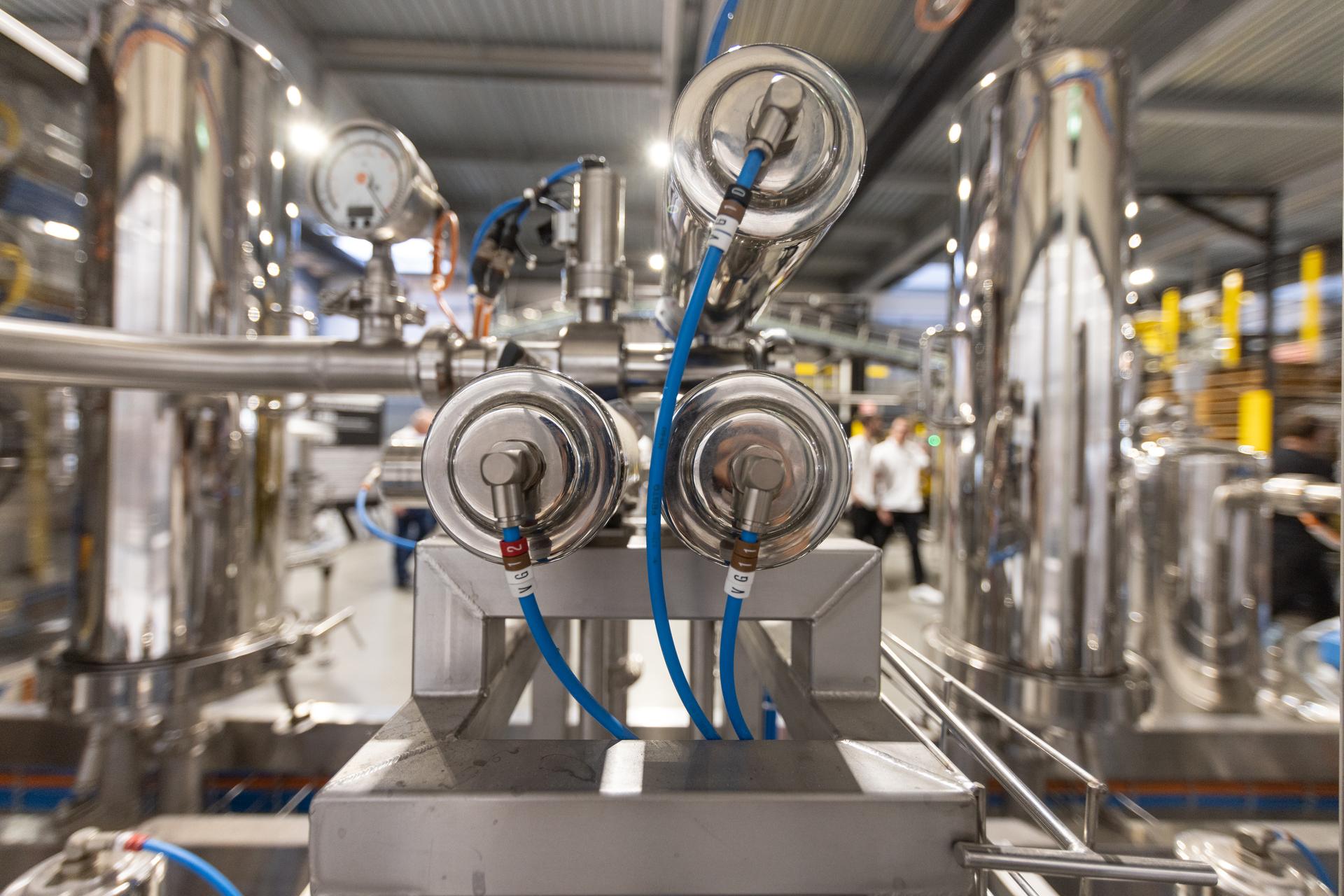
Before bottling, women and men look after a wine that has already been made. Filtration calls for a clear progression, from the coarsest stage to the finest, while keeping what needs preserving in view.
Women and men work around the equipment that takes wine towards the bottle. Their task is not to create it again. It is to care for what already exists through a succession of operations, including filtration. Behind this technical term lies a practical question that concerns you: how can wine be prepared for bottling while respecting its qualities?
Bottling is not simply a change of container. Wine can be preserved or damaged during the process. The care given to this stage must therefore serve the winemaking work that came before it. Filtration is part of that responsibility, with a clear principle: properly conducted filtration proceeds in successive stages, from the coarsest to the finest.
Start with the coarsest stage
Here, “coarse” describes a degree of filtration, not a way of working. It does not mean careless or cursory. Coarse filtration retains larger material than that targeted by finer filtration. These words therefore describe a difference in size, not a difference in the care given to the wine.
The progression matters as much as each individual stage. The process does not begin by asking the finest filter to do all the work. Earlier stages deal with the larger material before filtration continues at a finer level. You can understand the reasoning without knowing the equipment in detail: each stage has its place in a defined sequence.
Finer does not mean better
This principle is not simply about seeking the finest possible filtration. It describes a way of proceeding through successive degrees. Fineness alone is not a promise of wine quality. Confusing those ideas would mean judging the entire operation on just one of its characteristics.
The given fact specifies neither the number of stages, nor the equipment, nor the final degree of filtration. It therefore cannot support a recipe to be applied unchanged to every wine. It establishes an order: from coarsest to finest. Keeping that distinction clear avoids turning a working principle into an automatic guarantee of results.
The focus must remain on the wine’s organoleptic properties, in other words, its characteristics as perceived through the senses. Its colour, aromas and sensations in the mouth belong to the wine made beforehand. Preparation for bottling is not intended to replace them with a different profile. The wine itself remains the reference point, rather than any single feature of the filtration process.
Preserve rather than remake
For you, then, the issue goes beyond passing wine through a filter. The aim is to find the wine’s qualities in the bottle, not to regard filtration as an operation that creates them. Respecting a technical progression and respecting the wine share the same purpose, although the former alone cannot guarantee the latter.
This is the role of Épure, a bottling centre in Brignoles, in Provence Verte. Épure does not make the wine. It works to ensure that the wine retains all its organoleptic properties during bottling. Filtration in stages makes sense within that role: caring for a wine that has already been made, with the aim of preserving what it is.
Written with the help of artificial intelligence, and reviewed before publication.