
Bottling also helps preserve a wine’s freshness.
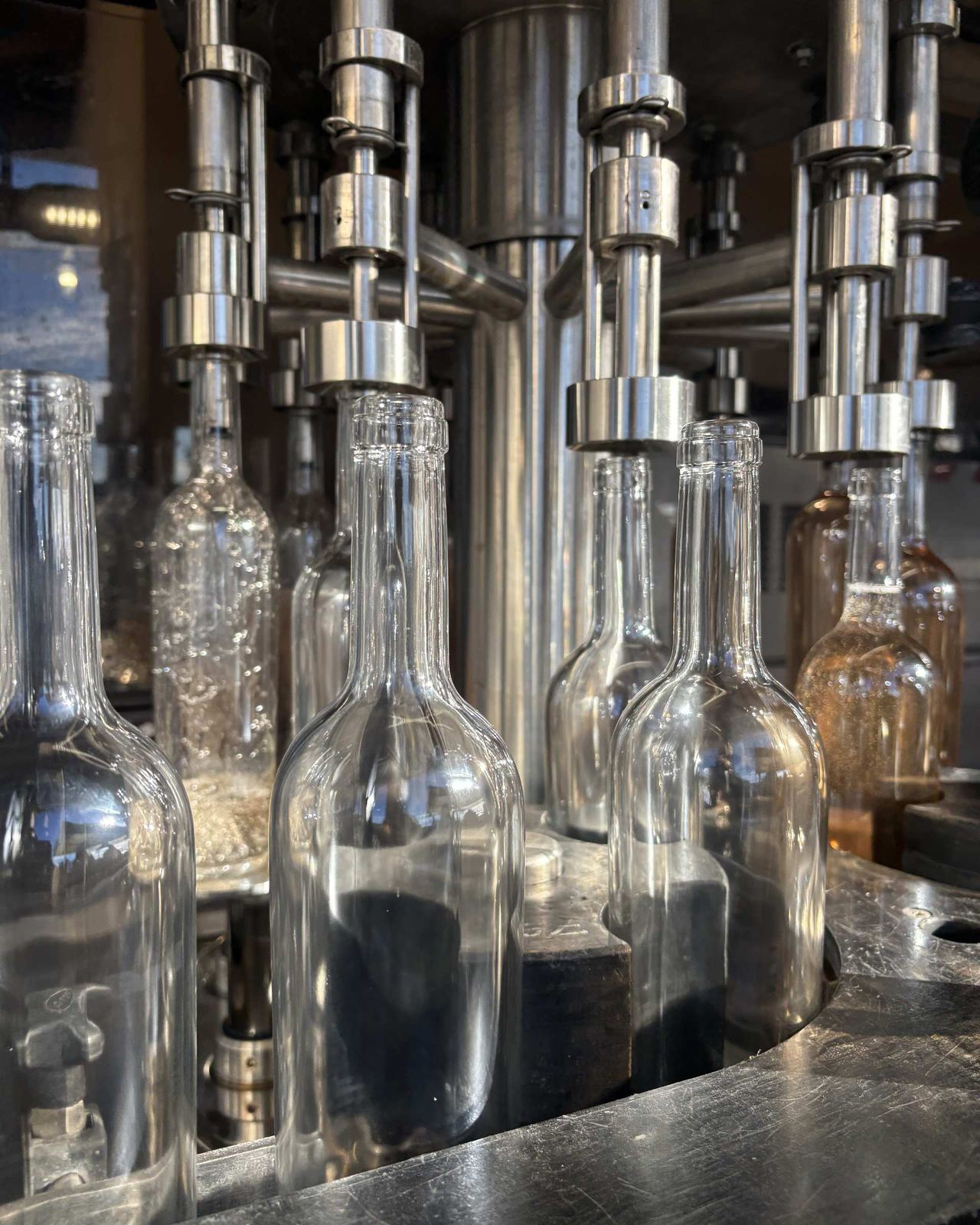
Dissolved carbon dioxide determines the sensation of freshness, fullness on the palate and liveliness of wine. Preserving it during bottling is therefore part of respecting the wine already made.
Women and men work around the bottling line. Their attention is on the bottles, but what matters is their contents. The task is not simply to move wine into a container: it is to preserve what you will experience when you taste it. A filled bottle alone cannot tell you whether the wine has retained its character.
Among the elements that matter, dissolved carbon dioxide has a discreet role. It is present in the wine without being something you can follow with your eyes along a conveyor. Yet its role directly concerns perception on the palate. This connection between something difficult to see and a perceptible sensation is what makes its preservation important.
A gas with a role on the palate
Dissolved carbon dioxide, meaning carbon dioxide present within the liquid, influences the sensation of freshness, fullness on the palate and liveliness of wine. These terms describe different aspects of tasting. Freshness here is a sensation, not a temperature reading. Fullness describes how much space the wine seems to occupy in your mouth. Liveliness refers to how lively the wine feels when you taste it.
This helps explain why the gas is not a minor detail of bottling. What is at stake goes beyond the appearance of wine inside a bottle. It concerns the way you perceive it when you taste it, the impression it makes on your palate and the balance between those sensations.
This does not mean that a wine should always seem fresher, fuller or livelier. Preserving is not the same as intensifying. The purpose of bottling is not to push a sensation in a particular direction, but to respect the character of the wine entrusted to the process.
Preserving rather than correcting
Bottling is a stage at which wine can be preserved or damaged. If dissolved gas matters to the way a wine is perceived, preserving it cannot be separated from preserving the wine itself. A change affecting this element can also alter what you feel on the palate. Care during bottling therefore has a sensory purpose, not just a practical one.
That does not mean bottling creates the wine’s personality. It already exists. The task is to avoid distorting it during this stage. Faithfulness to the wine is the guiding principle, rather than the pursuit of an added effect. That distinction gives meaning to the care taken when the wine is bottled.
Keeping the wine’s character intact
In Brignoles, in Provence Verte, this is where Épure plays its part. The bottling centre does not make the wine. It works to ensure that the wine retains all its organoleptic properties, in other words, its characteristics perceptible through the senses. Dissolved carbon dioxide is a reminder of why that mission matters: preserving a wine also means preserving the freshness, fullness and liveliness you will experience on the palate.
Written with the help of artificial intelligence, and reviewed before publication.